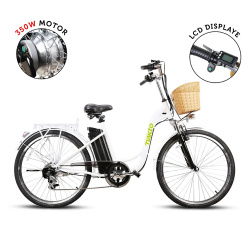
 1. What are the benefits of using an e-bike for women?
As the popularity of e-bikes continues to grow, many women are wondering about the advantages of using these electric bicycles. Here are some key benefits of using an e-bike:
- Effortless Riding: E-bikes provide pedal-assist, meaning you get extra power when you pedal. This makes uphill climbs and long distances much easier.
- Fitness and Health: E-bikes offer a great opportunity for women to stay active and improve their fitness levels. With adjustable assistance levels, you can choose to work as little or as much as you want.
- Convenience: E-bikes are a convenient mode of transportation, allowing you to avoid traffic congestion and parking hassles. They are also eco-friendly and help reduce carbon emissions.
- Accessibility: E-bikes make cycling accessible to more women, regardless of their fitness level or physical limitations. It enables individuals to go further and explore new places without overexertion.
- Cost Savings: E-bikes are an economical option for commuting as they cost significantly less than cars or public transportation in the long run. They also require minimal maintenance.
- Social Connection: Joining the e-bike community can be a great way for women to connect with like-minded individuals, participate in group rides, and share their experiences.
Overall, e-bikes offer a fun, efficient, and sustainable mode of transportation and bring numerous benefits to women who want to enjoy cycling.
2. How do I choose the right e-bike for me?
Choosing the right e-bike for women requires considering various factors to ensure a perfect fit. Here are some considerations to help you make an informed decision:
- Intended Use: Determine how you plan to use the e-bike. Whether it’s for commuting, leisurely rides, off-road adventures, or a combination, this will guide your choice.
- Frame Type: Consider the frame type that suits your riding style. E-bikes for women often feature step-through or low-step frames that make mounting and dismounting easier.
- Motor Power: Choose an e-bike with a motor power suitable for your needs. Higher power is preferable for hilly terrains, while lower power might be sufficient for urban commuting.
- Battery Range: Assess the battery range based on your ride distances. A longer battery range is crucial if you plan on taking longer rides without recharging.
- Comfort: Pay attention to features like suspension, seat quality, and handlebar design to ensure a comfortable riding experience, especially for longer rides.
- Size and Fit: Test ride different e-bike models to find the right size and fit. Ensure proper reach, standover height, and overall comfort when seated and pedaling.
- Extra Features: Consider additional features like lights, fenders, racks, and gears based on your specific needs and preferences.
- Budget: Determine your budget and explore e-bike options within that range. Remember to consider the long-term cost of maintenance and replacement parts.
By considering these factors, you can choose an e-bike that perfectly aligns with your riding needs, comfort, and budget.
3. Are e-bikes suitable for women of all fitness levels?
Yes, e-bikes are suitable for women of all fitness levels. One of the significant advantages of e-bikes is that they enable individuals to set their desired level of assistance. This means you can choose how much support you want from the electric motor based on your fitness level and comfort.
For women who are just starting their fitness journey or recovering from an injury, e-bikes offer a gentle way to engage in physical activity. The pedal-assist feature allows you to gradually build up stamina and strength without overexertion.
On the other hand, even experienced cyclists can benefit from e-bikes. They can challenge themselves by reducing the level of assistance and getting a more intense workout during their rides. E-bikes offer the flexibility to adjust the assistance levels and push your limits whenever you feel like it.
Therefore, regardless of your fitness level, an e-bike can be a fantastic tool to enjoy cycling, improve your fitness, and explore new adventures.
4. How far can I ride on a single e-bike charge?
The distance you can ride on a single e-bike charge depends on various factors:
- Battery Capacity: The capacity of the e-bike battery is one of the primary factors influencing the range. Higher-capacity batteries generally offer a more extended range.
- E-Bike Motor Power: The motor power affects the efficiency of the battery. A higher-powered motor may consume more battery energy, potentially reducing the overall range.
- Terrain: Riding on hilly terrains or rough surfaces will use more battery power compared to flat and smooth roads. Uphill climbs will drain the battery faster.
- Riding Style and Assistance Level: Your riding style, including how much pedal assistance you use, will directly impact the battery usage. Using higher assistance levels consumes more battery power.
- Weight: The weight of the rider and any additional cargo carried on the e-bike can impact the battery range. Heavier loads will require more power.
- Wind and Weather Conditions: Riding against strong headwinds or in adverse weather conditions can affect the battery range as more power is required.
Considering these factors, the range of an e-bike can vary widely. On average, e-bikes can travel between 20 to 50 miles on a single charge. However, some e-bike models with high-capacity batteries can offer ranges beyond 100 miles.
It’s essential to consult the specifications provided by the e-bike manufacturer and consider your specific riding conditions to estimate the range you can expect from your e-bike.
5. Do e-bikes require a license or registration?
In most cases, traditional e-bikes for women do not require a license or registration. However, the regulations regarding e-bikes can vary between countries and regions. Here are some general guidelines:
- Class 1 E-bikes: These e-bikes provide assistance only when pedaling and have a maximum speed limit, typically around 20 mph. They are usually considered bicycles and do not require a license or registration in many places.
- Class 2 E-bikes: Class 2 e-bikes have a throttle in addition to pedal-assist and can reach speeds similar to Class 1 e-bikes. Some regions may require a license or registration for Class 2 e-bikes.
- Class 3 E-bikes: Class 3 e-bikes have pedal-assist and can reach higher speeds, typically up to 28 mph. These e-bikes may require a license, registration, or other regulations in certain areas.
It’s crucial to research and understand the specific e-bike regulations in your area to ensure compliance with local laws. Check with your local transportation or motor vehicle department for accurate information about licensing, registration, and any restrictions related to e-bike usage.
6. Can I ride an e-bike in the rain?
While e-bikes are generally designed to handle various weather conditions, it’s essential to exercise caution and take necessary precautions when riding in the rain. Here are some considerations:
- Waterproofing: Ensure that your e-bike has adequate waterproofing measures in place. Look for models with sealed connectors and cables to prevent water damage.
- Tire Traction: Wet roads can be slippery, so be cautious while riding and allow for extra braking distance. Check your tire treads to ensure good traction on wet surfaces.
- Visibility: Rainy conditions often reduce visibility, so make sure your e-bike has sufficient lights, reflectors, and reflective gear to remain visible to other road users.
- Braking: Wet brakes might require a bit more force to slow down or stop. Test your brakes before heading out and adjust your riding style accordingly.
- Safety Gear: Wear appropriate rain gear, including a waterproof jacket, pants, and shoe covers, to stay dry and comfortable during your ride.
It’s also a good practice to check your e-bike after riding in the rain. Dry the bike thoroughly and inspect the electrical components to ensure no water ingress or damage occurred. Regular maintenance and servicing can help prevent any issues due to moisture.
Riding an e-bike in the rain can still be enjoyable and safe if you take the necessary precautions and adapt your riding style to the weather conditions.
7. Are e-bikes heavy and challenging to pedal without assistance?
E-bikes are generally heavier than traditional bicycles due to the added components like the motor, battery, and frame reinforcement. However, most e-bikes are designed to be ridden with or without assistance conveniently.
Even without assistance, e-bikes can still be pedaled like regular bikes. However, the additional weight may require slightly more effort, especially when accelerating or climbing hills. The overall riding experience of an e-bike without assistance is quite similar to a traditional bike.
When you engage the pedal-assist mode, the electric motor kicks in to provide extra power, amplifying your pedaling efforts. This makes uphill climbs and challenging terrains much more manageable, regardless of the e-bike’s weight.
Therefore, while e-bikes may be slightly heavier, they are not overly challenging to pedal without assistance and can be used just like regular bikes when you prefer a traditional cycling experience.
8. How fast can e-bikes go?
The speed of an e-bike depends on various factors, including legal restrictions and the e-bike class. Here’s an overview:
- Class 1 E-bikes: Class 1 e-bikes provide pedal-assist and have a maximum assisted speed limit of around 20 mph.
- Class 2 E-bikes: Class 2 e-bikes have a throttle in addition to pedal-assist and can also reach speeds similar to Class 1 e-bikes, typically around 20 mph.
- Class 3 E-bikes: Class 3 e-bikes offer pedal-assist and can go up to 28 mph with motor power cutoff at that speed.
It’s important to note that different regions and jurisdictions may have their specific speed limits and regulations for e-bikes. Always familiarize yourself with the local laws to ensure you ride within the legal speed limits.
E-bike manufacturers often limit the speed of their models to comply with local regulations. However, it’s worth noting that some e-bikes can be modified to achieve higher speeds. Modifying an e-bike that exceeds legal speed limits may have legal consequences and should be avoided.
9. Can I use an e-bike for long-distance touring?
Yes, e-bikes are excellent options for long-distance touring, providing an efficient and enjoyable way to explore new places. With their pedal-assist feature, e-bikes can extend your riding range and reduce fatigue during long rides.
Here are a few reasons why e-bikes are popular among women for long-distance touring:
- Extended Range: E-bikes can significantly increase the distance you can cover since the electric motor assists your pedal power. This allows you to explore more without feeling overly fatigued.
- Hill Climbing: E-bikes make uphill climbing much easier, ensuring you can conquer hilly terrains during your long-distance tour without excessive strain.
- Flexibility and Adaptability: E-bikes offer multiple assistance levels, allowing you to adjust the power output based on your energy levels and the terrain you’re tackling.
- Comfort: Many e-bike models for women are designed with comfort in mind, featuring added suspension, ergonomic seating, and adjustable riding positions to enhance long-distance riding comfort.
- Versatility: E-bikes are versatile and can handle various road conditions, from paved roads to gravel trails, making them ideal for exploring different routes during your tour.
When embarking on a long-distance tour with an e-bike, make sure to plan your route, carry necessary supplies, and stay within the battery range of your e-bike. Regular breaks for rest and recharging, if needed, will ensure an enjoyable and successful tour.
10. How much do e-bikes for women typically cost?
The cost of e-bikes for women can vary depending on several factors, including brand, features, motor power, battery capacity, and overall build quality. Generally, e-bike prices can range from a few hundred dollars to several thousand dollars. Here’s a breakdown of the typical price ranges:
| E-Bike Category | Price Range |
|---|---|
| Entry-Level | $800 – $1,500 |
| Mid-Range | $1,500 – $3,000 |
| High-End | $3,000 and above |
Entry-level e-bikes often offer basic features, lower motor power, and shorter battery ranges. They are suitable for casual riders who want to experience e-bike benefits without significant investments.
Mid-range e-bikes offer better build quality, improved motor power and battery capacity, and additional features like suspension and integrated lights. They are ideal for regular commuters and riders who seek a balance between quality and affordability.
High-end e-bikes provide top-tier components, higher motor power, longer battery ranges, premium design, and advanced features. These e-bikes are suitable for avid cyclists, enthusiasts, and riders who prioritize performance and luxury.
It’s crucial to consider your budget, riding requirements, and long-term cost savings when choosing an e-bike. Remember that investing in a quality e-bike can provide better durability, performance, and overall satisfaction in the long run.
11. How long does it take to charge an e-bike battery?
The charging time of an e-bike battery can vary depending on factors like battery capacity, charger output, and the current battery level. On average, it takes around 3 to 6 hours to fully charge an e-bike battery. Here are some factors that can affect the charging time:
- Battery Capacity: Higher-capacity batteries take longer to charge compared to smaller ones. A larger battery may have a capacity of 400Wh or more, while smaller ones can be around 250Wh. The charging time increases with higher capacity.
- Charger Output: The charger’s output power rating also affects the charging time. Higher-output chargers generally charge faster. Chargers typically range from 1A to 4A or more, with higher amperage resulting in quicker charging.
- Battery Level: If the battery is completely drained, it will take longer to charge compared to when it’s partially charged. Most e-bike batteries can be charged partially without affecting their overall lifespan.
- Battery Chemistry: Different types of battery chemistries, such as lithium-ion or lithium polymer, may have varying charging characteristics. Consult the manufacturer’s guidelines for optimal charging times for your specific battery type.
- Charging Port Compatibility: Ensure that your e-bike’s charging port is compatible with the charger you are using. Using the correct charger and avoiding third-party or incompatible chargers is crucial for efficient and safe charging.
It’s essential to follow the manufacturer’s recommendations regarding charging times and procedures for your specific e-bike model. Overcharging or charging the battery for an excessively long time may impact battery performance and lifespan. Additionally, using a charger with higher amperage than recommended can also lead to potential issues.
Investing in a second battery or a fast charger can be advantageous, allowing you to have a fully charged spare battery or reducing the charging time when needed. This can be beneficial for longer rides or when you have limited time for recharging.
Always refer to the manufacturer’s instructions and guidelines for accurate charging times and optimal charging practices to ensure the longevity and performance of your e-bike battery.
Conclusion
E-bikes for women are becoming increasingly popular due to their numerous benefits, including effortless riding, fitness and health advantages, convenience, accessibility, and cost savings. Choosing the right e-bike involves considering factors such as intended use, frame type, motor power, battery range, comfort, size and fit, extra features, and budget.
While e-bikes are designed to handle various weather conditions, it’s important to take necessary precautions when riding in the rain and ensure proper waterproofing, tire traction, visibility, braking, and safety gear. E-bikes may be slightly heavier, but they are not overly challenging to pedal without assistance and can be used like regular bikes.
The speed of an e-bike depends on the class and legal restrictions, ranging from 20 to 28 mph. E-bikes are suitable for long-distance touring, offering extended range, hill climbing capabilities, flexibility, comfort, and versatility. The cost of e-bikes can vary from a few hundred dollars for entry-level models to several thousand dollars for high-end e-bikes.
Finally, charging an e-bike battery takes around 3 to 6 hours, depending on factors such as battery capacity, charger output, battery level, battery chemistry, and charging port compatibility. It’s important to follow the manufacturer’s guidelines for optimal charging times and practices.
By considering these common questions and their answers, women can make informed decisions when it comes to choosing, using, and enjoying e-bikes. E-bikes offer a fun, efficient, and sustainable mode of transportation and a fantastic way for women to explore new adventures, improve fitness, and connect with a vibrant e-bike community.
FAQ
| Question | Answer |
|---|---|
| What are the benefits of using an e-bike for women? | E-bikes provide effortless riding, fitness and health benefits, convenience, accessibility, cost savings, and social connection. |
| How do I choose the right e-bike for me? | Consider factors like intended use, frame type, motor power, battery range, comfort, size and fit, extra features, and budget. |
| Are e-bikes suitable for women of all fitness levels? | Yes, e-bikes can be used by women of all fitness levels as the assistance level can be adjusted according to individual needs. |
| How far can I ride on a single e-bike charge? | The range depends on factors like battery capacity, motor power, terrain, riding style, weight, and weather conditions, with an average range of 20-50 miles. |
| Do e-bikes require a license or registration? | In most cases, traditional e-bikes do not require a license or registration, but regulations vary between regions and e-bike classes. |
| Can I ride an e-bike in the rain? | Yes, e-bikes can be ridden in the rain, but precautions should be taken such as ensuring waterproofing, tire traction, visibility, and proper safety gear. |
| Are e-bikes heavy and challenging to pedal without assistance? | E-bikes are slightly heavier than regular bikes, but they can still be pedaled without assistance. The weight is more noticeable during acceleration and climbing. |
| How fast can e-bikes go? | Speed varies depending on the e-bike class, with Class 1 and 2 e-bikes typically reaching speeds of around 20 mph, and Class 3 e-bikes reaching up to 28 mph. |
| Can I use an e-bike for long-distance touring? | Yes, e-bikes are suitable for long-distance touring due to their extended range, hill climbing abilities, flexibility, comfort, and versatility. |
| How much do e-bikes for women typically cost? | E-bike prices vary, with entry-level models costing $800-$1,500, mid-range models costing $1,500-$3,000, and high-end models costing $3,000 and above. |
| How long does it take to charge an e-bike battery? | Charging time ranges from 3 to 6 hours depending on factors like battery capacity, charger output, battery level, battery chemistry, and charging port compatibility. |